

What If It’s Not Burnout At All?
I used to think I was burned out. Truly. I thought I was exhausted from doing too much, carrying too much, grinding too hard. But when I finally slowed down long enough to hear myself think, I realized something a lot more uncomfortable. I wasn’t burned out. I was completely disconnected from myself.
And that’s a different kind of tired.
Most entrepreneurs assume burnout is the problem because it’s the only language we have for overwhelm. Burnout feels acceptable, logical, even admirable in hustle culture. But what many of us label as burnout is actually something deeper. It’s a breakdown in self-trust.
Because when you don’t trust yourself to rest, pivot, choose differently, say no, express your truth, or walk away from what’s draining you, your body will eventually shut you down and call it “burnout.” But the root is much more emotional and internal than it is physical.
And this is where things get interesting.
Burnout improves with rest…Self-trust issues do not.
If anything, rest makes the misalignment louder.
Inside the world of aligned business, self-trust isn’t a cute idea or a spiritual concept. It is the foundation. Without it, every decision feels heavy, every launch feels pressured, and every next step feels like guessing.
This is exactly why energy-focused approaches like intuition, emotional check-ins, and your natural rhythms matter so much. When you learn to trust your own timing and internal guidance, everything in your business starts to feel lighter and more honest. If you haven’t read it yet, this post explains it beautifully:
From Burnout to Balance: How Energy Mapping Changed My Workflow
And to be clear, there is a real difference between true burnout and emotional misalignment.
But what I’m talking about today isn’t workplace burnout. It’s the hidden emotional patterns that drain you because you aren’t listening to yourself.
In this post, we’re going to explore the subtle ways self-trust issues disguise themselves as burnout, why it happens, and how to rebuild that inner confidence so your business feels like something you can finally breathe in.
If you’re ready to rebuild your business or career from alignment, clarity, and truth, join the waitlist for my upcoming course: The Inner Advantage
Symptom #1: You’re Exhausted Even When You’re Resting
Because burnout gets better with rest. Self-trust issues don’t.
Let’s start with the one that fools almost everyone.
You take a day off. You cancel plans. You sleep in. You do all the things the internet told you to do for burnout. And yet you wake up just as drained as before. Maybe even more.That isn’t burnout. That is your nervous system staying in survival mode because deep down, you do not trust yourself to slow down, say no, or let something go.
Burnout is physical. Self-trust issues are emotional. They hit differently.
Burnout says, “I am depleted.”Self-trust issues say, “I don’t feel safe resting because something might fall apart if I stop.”So even when your body pauses, your mind doesn’t. And neither does your stress response.
This is why you can take a vacation and still come back exhausted.
This is why you can sleep eight hours and wake up overwhelmed.
This is why “taking a break” often feels pointless.
When you don’t trust yourself to make aligned decisions, your body stays tense. Your energy stays guarded. Rest cannot land. Nothing resets, nothing restores, and nothing shifts because the real problem has not been addressed.
Your body is tired because your spirit is tired of being ignored.You cannot rest your way out of a self-trust problem. You have to reconnect with the part of you that knows when to pause, when to pivot, and when to protect your energy.
Symptom #2: You Keep Second-Guessing Every Decision

This is not burnout. This is a self-trust leak.
Let’s talk about the kind of mental exhaustion that has nothing to do with workload and everything to do with doubt. You know the pattern. You make a decision. You feel good for five minutes. Then suddenly you’re questioning every angle, texting your friend for reassurance, reading one more article, doing three more Google searches, and asking the universe for a sign even though you already know the answer.
That is not burnout. That is self-trust erosion. Burnout makes your body tired. Self-trust issues make your mind spiral.
When you stop trusting your inner authority, you start outsourcing clarity to other people, analytics, mentors, podcasts, your therapist, and sometimes complete strangers on the internet. You are constantly looking for someone to tell you the choice you already feel is the right one.
Overthinking is not a sign that you need more information.It is a sign that you do not feel safe trusting your own wisdom.
This kind of chronic doubt drains your energy more than any workload ever will. Decision paralysis is emotional exhaustion pretending to be “I’m just tired.”
And every time you second-guess yourself, you reinforce the belief that your intuition is not enough. That you need permission to follow what you feel. That clarity must come from outside instead of within.
When you’re grounded in self-trust, decisions feel clean. When you’re disconnected from yourself, even the simplest decision feels like a crisis.
Symptom #3: Everything Feels Heavy… But You’re Still High-Functioning
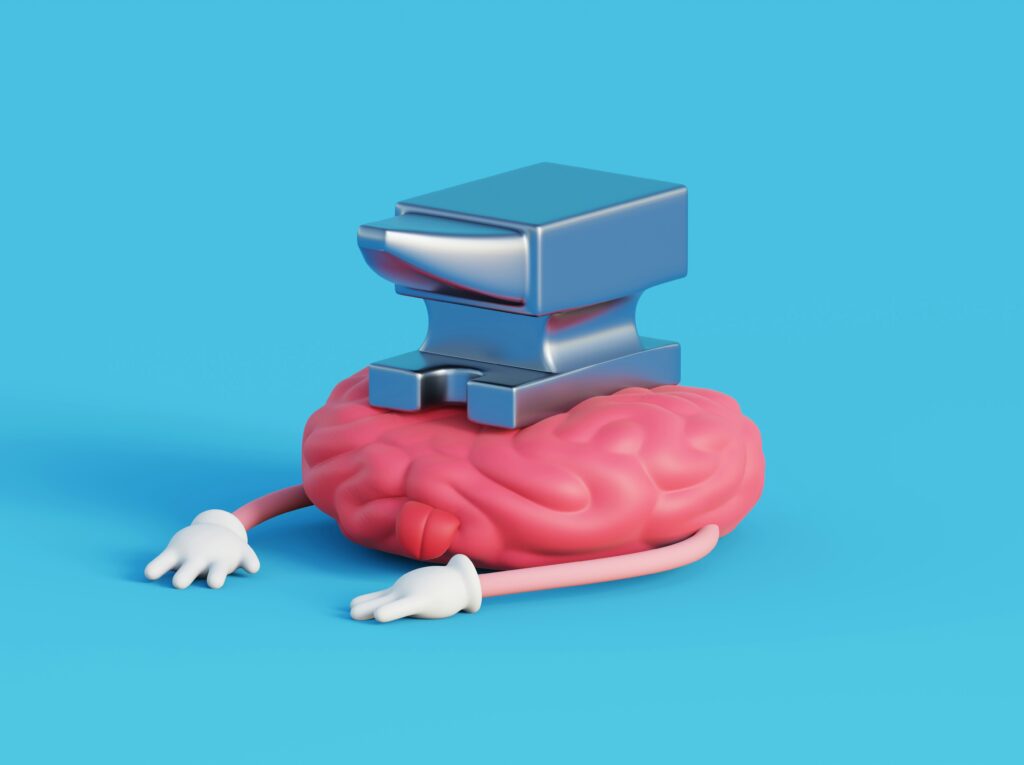
This is not burnout. This is misalignment disguised as productivity.
One of the sneakiest symptoms of self-trust issues is this one. On the outside, you look completely fine. You are checking tasks off, meeting deadlines, showing up for clients, posting content, and doing all the things successful people are supposed to do.
But inside? Everything feels heavy.
You wake up overwhelmed even when nothing is technically wrong. You push through your day with a quiet sense of dread. You show up, but you are not connected. You’re productive, but not present. You’re performing, but not expressing.
This is the emotional version of wearing a mask.
High-functioning misalignment is dangerous because people often assume you’re doing great. You might even convince yourself you’re doing great because everything looks “right.” But heaviness is not normal. Heaviness is your intuition letting you know that something is no longer aligned with who you’re becoming.Burnout would shut you down. Self-trust issues keep you running on autopilot.
You do not collapse. You disconnect.
You start moving from pressure instead of desire, from obligation instead of alignment, from strategy instead of truth. And the more you disconnect, the heavier everything becomes.
Symptom #4: You Feel Disconnected From Your Own Ideas
This is not burnout. This is losing access to your inner voice.
There is a specific kind of exhaustion that has nothing to do with physical tiredness. It is the feeling of sitting in front of your laptop, knowing you have ideas, knowing you are creative, knowing you have something to say, but none of it feels like you.
You can write.
You can create.
You can brainstorm.
But you cannot feel any of it.
This is not burnout. Burnout drains your energy.Self-trust issues disconnect you from your inner voice. When you stop trusting yourself, you stop trusting your ideas. You start thinking your intuition is unreliable. You look at your own creativity and assume it needs to sound like someone else. You automatically second-guess the ideas that used to flow without effort.
This is how you end up producing content that is technically fine but emotionally flat. Offers that are polished but not aligned. Strategies that look smart but feel empty.
Your work stops feeling like an expression of who you are and starts feeling like something you are performing. If your creativity feels dull, disconnected, or muted, it is not because you are uninspired. It is because your higher self is no longer being invited into the conversation.
The ideas have not left you. You stopped trusting them.
Ask yourself this:
Does this idea light me up?
Does this sound like me, or does it sound like the version of me I think the internet wants?
Would my higher self stand behind this, or would she release it?
When you begin answering honestly, your voice returns. And when your voice returns, your alignment does too.
Symptom #5: You’re Operating From Obligation Instead of Desire
This is not burnout. This is self-abandonment disguised as responsibility.
Here is the symptom almost everyone overlooks.
You are saying yes to things you do not want to do.
You are taking clients who do not feel aligned.
You are committing to projects that drain you.
You are doing work that no longer reflects who you are.
And you are calling it “being responsible.”
At some point you have to be honest with yourself and when you consistently choose obligation over desire, you are not being responsible. You are abandoning yourself.
Burnout is about capacity. Self-trust issues are about consent.
When you do things you no longer want to do, your body feels it. Your energy feels it. Your intuition feels it. You move through your day heavy, resentful, and disconnected, not because you are burned out, but because you are betraying your own no.
People-pleasing is not noble. Self-sacrifice is not sustainable. Obligation is not alignment.
This is the emotional pattern that quietly erodes self-trust. Every time you override your desire with duty, you teach yourself that your truth cannot be trusted. You reinforce the belief that you are safer meeting expectations than following your inner knowing.
This is why your work feels draining. Not because it is too much. Because it is not you.
If you want to rebuild your relationship with your intuition and your truth, this is the work we do inside my coaching: Book an Alignment Coaching Session
Why We Mislabel Self-Trust Issues as Burnout
Because burnout feels easier to admit than self-abandonment.
Let’s tell the truth about why so many entrepreneurs misdiagnose themselves with burnout when the real issue is a breakdown in self-trust.
Burnout is socially acceptable.
Self-trust issues feel personal.
Burnout says, “I am overwhelmed.”
Self-trust issues say, “I do not trust myself to choose differently.”
Burnout says, “My plate is full.”
Self-trust issues say, “I keep saying yes to plates I don’t even want.”
Burnout says, “I need rest.”
Self-trust issues say, “I need honesty.”
And honesty is much harder.
Most people would rather collapse than confront their patterns. They would rather believe they are exhausted from ambition than admit they are exhausted from ignoring themselves.
Here are the real reasons we confuse burnout with self-trust issues:
1. Admitting misalignment requires courage
It forces you to look at where you’ve been performing instead of expressing, pleasing instead of leading, and choosing pressure instead of truth.
2. Burnout gives you an external villain
“The workload.”
“The schedule.”
“The industry.”
“The clients.”
Much easier than saying, “I abandoned my boundaries.”
3. We were never taught emotional self-trust
We were taught:
- how to meet expectations
- how to be reliable
- how to be productive
- how to seek approval
But not how to listen to ourselves.
4. Misalignment is subtle
Burnout slaps you in the face.
Self-trust issues whisper until they become a scream.
5. High achievers normalize suffering
If something is hard, you work harder.
If something feels off, you push through.
If something is misaligned, you call it a “tough season.”
But the deeper truth is this.
Your spirit always knows when something is not for you.
Your body knows.
Your energy knows.
Your intuition knows.
You can pretend you’re burned out, but your higher self will continue whispering, “We are not doing this anymore.”
How to Start Rebuilding Self-Trust Today

You do not rebuild self-trust through force, discipline, or performing your way into worthiness. You rebuild self-trust the same way you build any relationship. With presence.With honesty.
With small daily choices that say, “I hear you. I honor you. I choose you.” Self-trust is a practice.
And here are the practices that actually work.
1. Honor Your Body’s Signals Instead of Overriding Them
Your body is the first place self-trust shows up and the first place it disappears. If something feels tight, heavy, or draining, there is a message there. If something feels open, peaceful, or expansive, that is guidance too.
2. Practice Daily Micro Honesty
Self-trust doesn’t collapse in one moment. It breaks in tiny ways. Every time you say yes when you meant no. Every time you pretend you’re fine when you’re not. Every time you silence what you feel for what is expected. Rebuilding self-trust means choosing honesty in small, low-stakes moments until truth feels safe again.
Ask yourself once a day: What am I pretending not to know?
Your higher self will always respond.
3. Create Stillness So Your Inner Voice Has Room to Speak
Your intuition cannot get through the noise of overthinking, productivity panic, or constant input.
Clarity needs space. Self-trust needs silence. Give yourself five minutes a day. Sit. Breathe. Ask, “What do I need today?”….Listen without editing.
4. Audit Your Offers, Obligations, and Energy Leaks
Misalignment often hides in your commitments.
The project you dread.
The content you feel nothing about.
The client who drains your soul.
The schedule that belongs to your past self.
Self-trust grows when you stop forcing what no longer fits.
5. Make One Aligned Decision Per Day
Not ten. Not a life overhaul. Just one. Say no when you want to say no. Say yes when it lights you up. Take a break before your body demands it. Send the email you’ve been avoiding.
Choose the decision that feels like relief.
When you follow through on one aligned decision per day, your nervous system begins to trust you again. And self-trust becomes your default.
6. Build a Relationship With Your Higher Self
Your higher self is the part of you that knows where you’re going, even when your mind doesn’t.
You reconnect by asking:
“What would my higher self choose here?”
“How would she handle this?”
“What truth is she pointing me toward?”
7. Get Guided Support When You Need It
Sometimes you need someone who can see the patterns you’ve become blind to. Someone who can mirror back your truth. Someone who can guide you into the version of yourself you keep avoiding and desiring at the same time. That is where your coaching work shines.
You’re Not Burned Out. You’re Being Called Back to Yourself.
If this post hit something deep, it is not because you are broken or behind or failing. It is because some part of you already knows the truth. You are not exhausted from doing too much. You are exhausted from abandoning yourself in the process.
Burnout is a symptom. Self-trust is the root.
And the moment you stop confusing the two, everything shifts.
You feel lighter because you stop performing. You feel clearer because you stop second-guessing. You feel more powerful because you stop looking outward for answers that have been inside you the entire time. Your business does not need a new strategy. Your spirit needs to be invited back into the room.
And when you rebuild that relationship, when you start listening to the part of you that already knows, you step into a kind of alignment that no amount of hustle can touch.
Your next level is not hiding in strategy. Your next level begins the moment you decide to trust yourself again.
You deserve a business that feels like truth, not pressure. You deserve a life that feels like yours. You deserve to lead from who you are, not who you think you need to be. And you are closer to that life than you think.